

[Photo by Bill Clark/Getty Images]
Last week, the House of Representatives passed an updated version of the 21st Century ROAD to Housing Act, the sweeping housing bill that overwhelmingly passed the Senate in March. This version saw similar bipartisan support, passing 396-13 – not a single Democrat voted against it, and President Trump backed the bill.
For those keeping track from home, the TL;DR is: slightly different versions of the same bill have sailed through each chamber of Congress with the president’s support. We are now closer to seeing landmark housing legislation become law than at any other point this Congress – or in the past 30 years.
In football terms, we’re at first and goal from the 10. But it’s still possible this bill dies before reaching the endzone: the two main housing negotiators in the Senate, Tim Scott (R) and Elizabeth Warren (D), signaled they aren’t happy with the House’s changes, saying after the House vote that there was “still work to be done.”
The House bill answered our and other YIMBY calls to improve upon a great but flawed Senate bill, which is why we worked with partners like Up for Growth, the Institute for Progress, the Center for Public Enterprise, YIMBY Action, and others to coordinate a letter of support from nearly 200 industry and advocacy groups. The bill isn’t perfect, but worse is dragging negotiations out much longer.
That’s why the Senate needs to finish this bill, whether that means passing the House version outright or moving quickly through a real negotiation process. Stalling indefinitely doesn’t produce a better bill. It produces no bill.
The House and Senate are Quibbling Over Small Differences
The core framework of the House bill is the same as the Senate’s: streamlined regulations, construction incentives, and a ban on large institutional investors purchasing existing single-family homes. Nearly all of the specific provisions that make this bill historic are still there – the $200 million innovation fund rewarding cities and towns that demonstrably increase housing supply, the chassis reform removing an outdated federal requirement that unnecessarily adds costs to manufactured homes, and environmental review streamlining for housing projects.
Taken together, they represent a fundamentally new model for how the federal government drives housing production – exactly the model the abundance movement and YIMBY organizers have spent years building the case for.
But importantly, the House version also fixes a key issue YIMBYs, abundance proponents, and industry leaders had with the Senate bill. As I wrote about in March, the Senate bill included a provision that forced large institutional builders of single-family rental homes to sell them within seven years, which made building these homes financially unfeasible. According to the Wall Street Journal, this requirement was already doing real damage: at least $3.4 billion in housing investment froze immediately after Senate passage out of fear this might become law, threatening more than 10,000 units. The Urban Institute projected the provision would, if passed, eliminate at least 72,000 homes annually.
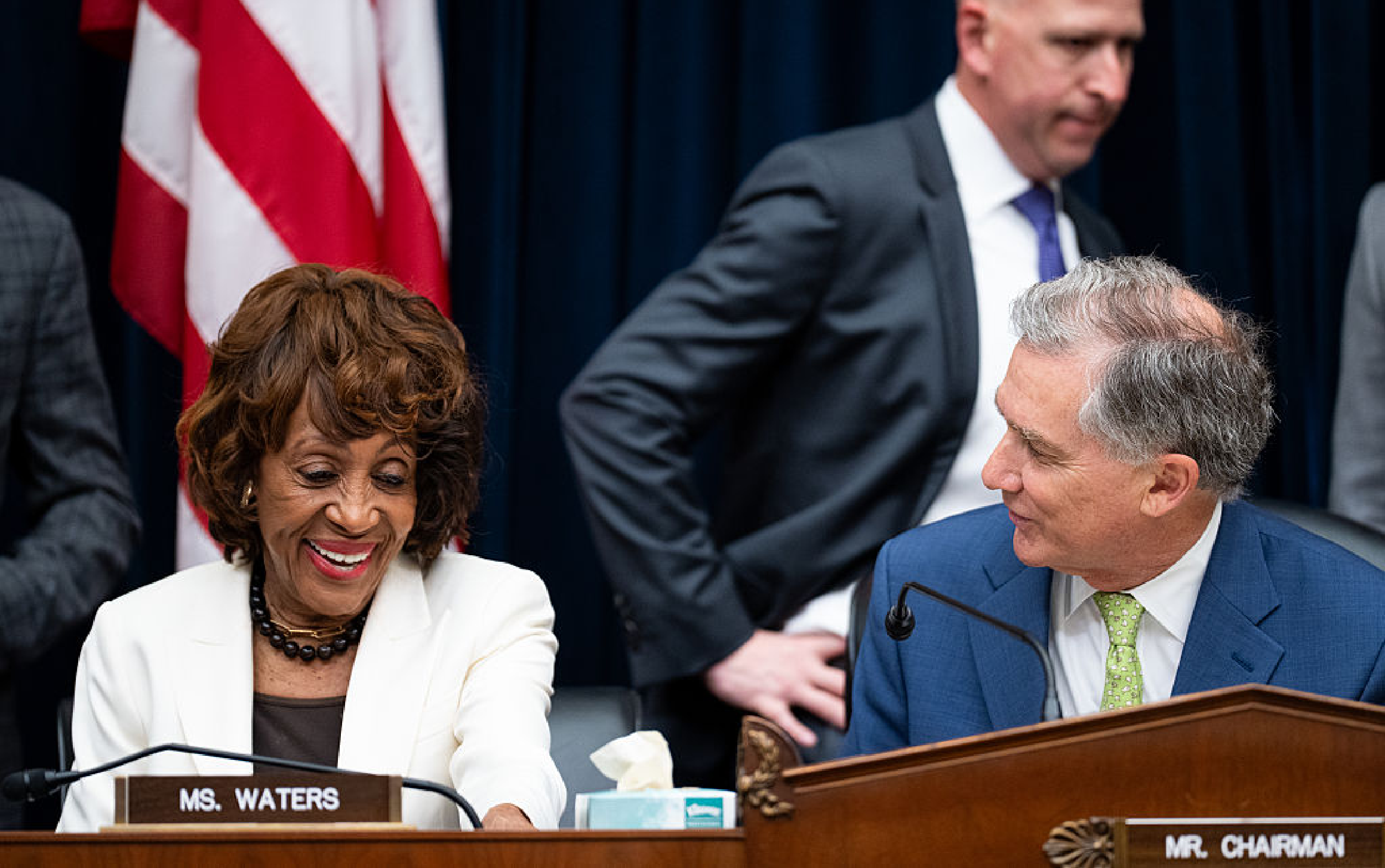
This reporting clearly worried House leadership – Ranking Member Maxine Waters cited it in a letter to colleagues urging them to vote for the bill, and the House Build America Caucus helped lead a 76-member, bipartisan letter demanding the provision be fixed.
The House ended up removing that forced-sale requirement while keeping the ban on large institutional investors purchasing existing single-family homes. It also establishes a new renter outreach resource for reporting and resolving disputes with institutional investor landlords. It’s a good trade – and a major victory for YIMBYs and abundance advocates.
That’s not to say this is a perfect bill. Permanent authorization of the federal program that sends money to states and cities to rebuild housing and other infrastructure after major disasters (CDBG-DR) didn’t survive. The Build Now Act – which provides carrots and sticks for expensive cities’ housing production – ended up in a different bill. Some unrelated community banking measures that Democrats don’t like were added back in from the original House bill that passed in February.
But bipartisan legislation in a divided government always involves tradeoffs. The provisions Senate Democrats are skeptical of shouldn’t be deal-breakers – zero House Democrats, including the most progressive members of the caucus, found them problematic enough to vote no. Passing a bill that materially improves housing affordability for millions of Americans is worth it. We can’t let perfect be the enemy of the good here.
It’s Time to Pass a Bill
The national housing shortage surpassed 4 million homes in 2025. Home prices are up nearly 55 percent since the pandemic. Those numbers represent families priced out of their homes, renters stretched beyond their means, and communities that don’t have enough places for the people who need to live in them.
Senators are going to go home this fall to constituents asking them to do something about housing. If they want an answer, there are two paths forward. One is the fastest route: passing the House bill as-is and sending it to the President’s desk.
The second path, and more realistic at this point, is to engage in real dialogue with the House. The Senate originally thought that, if they secured President Trump’s support (which they did), the House would accept their bill as-is. That ended up being wrong – the House was determined to make its voice heard, and Trump was also willing to support the House’s proposal. Given that, the Senate should negotiate with the House to get a final compromise, and understand they won’t be able to get everything they want.
Every additional week of stalemate makes it more likely that this bill collapses entirely, under the weight of the calendar, midterm pressure, or some unrelated political fight. It could also fall short at the feet of lawmakers’ pride – every negotiator wants their version of the bill to be the one that passes. But the smartest thing for everyone would be to get a concrete win on affordability, the issue voters say matters most to them. Otherwise, they’ll all head into an election with nothing to show on housing, after months of hard bipartisan negotiation that already produced a workable compromise.
The Senate is one play away from a touchdown here. Let’s not fumble it.