

New research from Blue Rose Research on energy bills and infrastructure
As Congress debates how to fix our broken permitting processes, our team wanted to know if fixing our energy system is a winning issue or just inside baseball that most Americans don’t care about. We hired Blue Rose Research to find out.
From May 13–23, 2026, they surveyed nearly 20,000 likely 2026 voters across the country. Overall, we found that voters want affordable and reliable electricity, that they support building the infrastructure to get there, and that they have a clear sense of who should be held accountable when costs go up.
Below is our summary of key findings. You can view the full results, including the crosstabs, HERE, and can download Blue Rose’s memo HERE.
1. Electricity costs are a top concern, and voters blame politicians and utility companies.
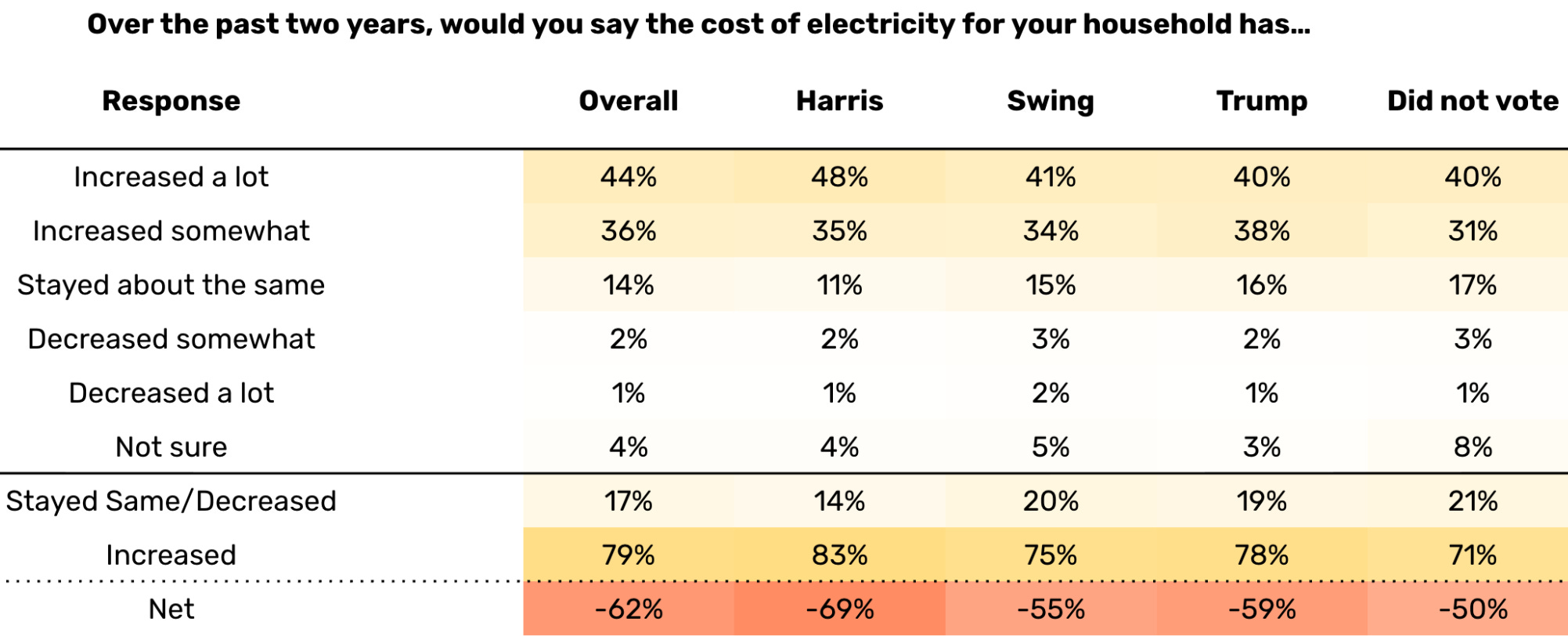
In line with other recent polling, we found 83% of voters are concerned about household electricity costs, with 79% saying their bills have risen over the past two years.
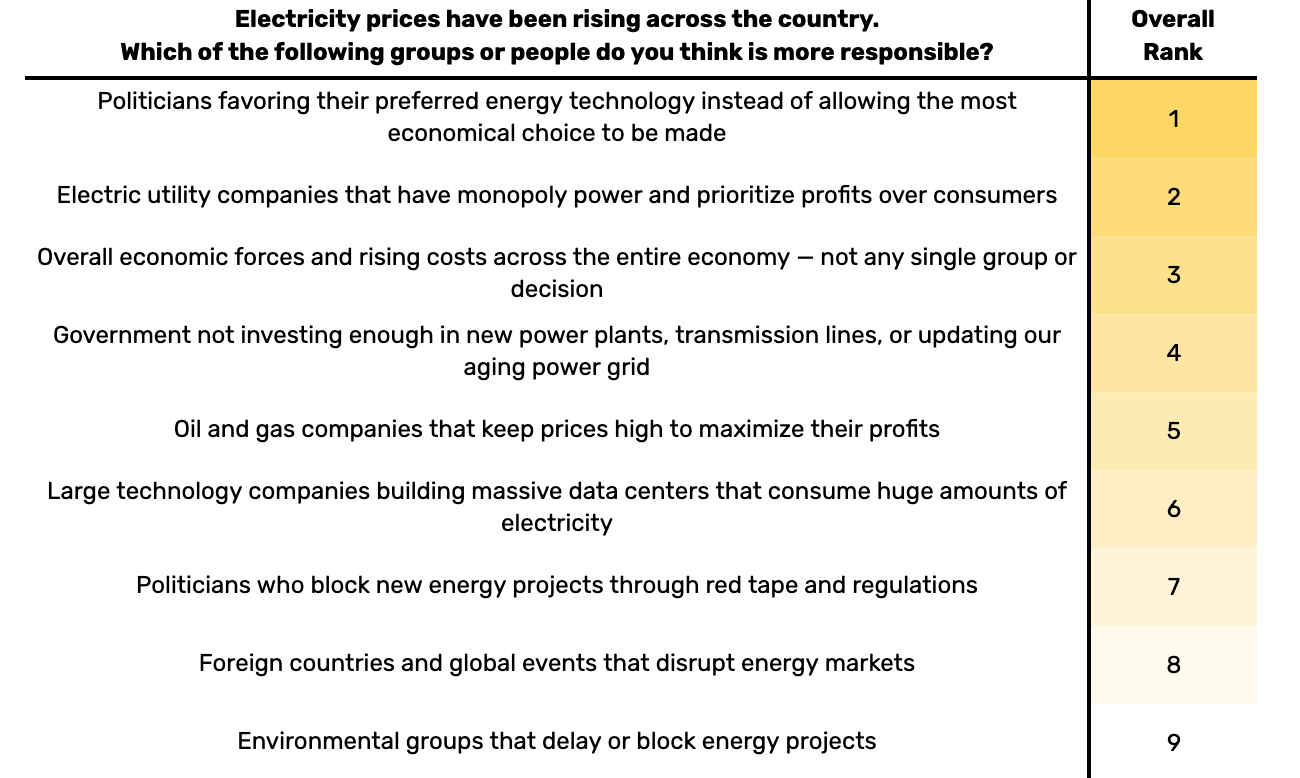
That’s not a surprise to anyone paying attention to their electricity bills or the constant focus in DC on “affordability.” But what’s less clear is how voters assign responsibility. When we asked voters who deserves the most blame for rising electricity prices, two groups came out on top: politicians who favor specific energy technologies rather than allowing the most economical options, and monopoly electric utilities that prioritize profits over consumers. Notably, even with the conflict in Iran escalating energy prices, voters put less blame on foreign countries and global events and far more on people and institutions closer to home.
2. Voters want permitting reform, and they really don’t want the president canceling approved projects.
Clearly, voters are frustrated that costs are high and believe that political interference in energy markets is a reason why. That’s a strong argument for tech-neutral permitting reform that lets the most economical options win — exactly the type of legislation being considered in Congress right now.
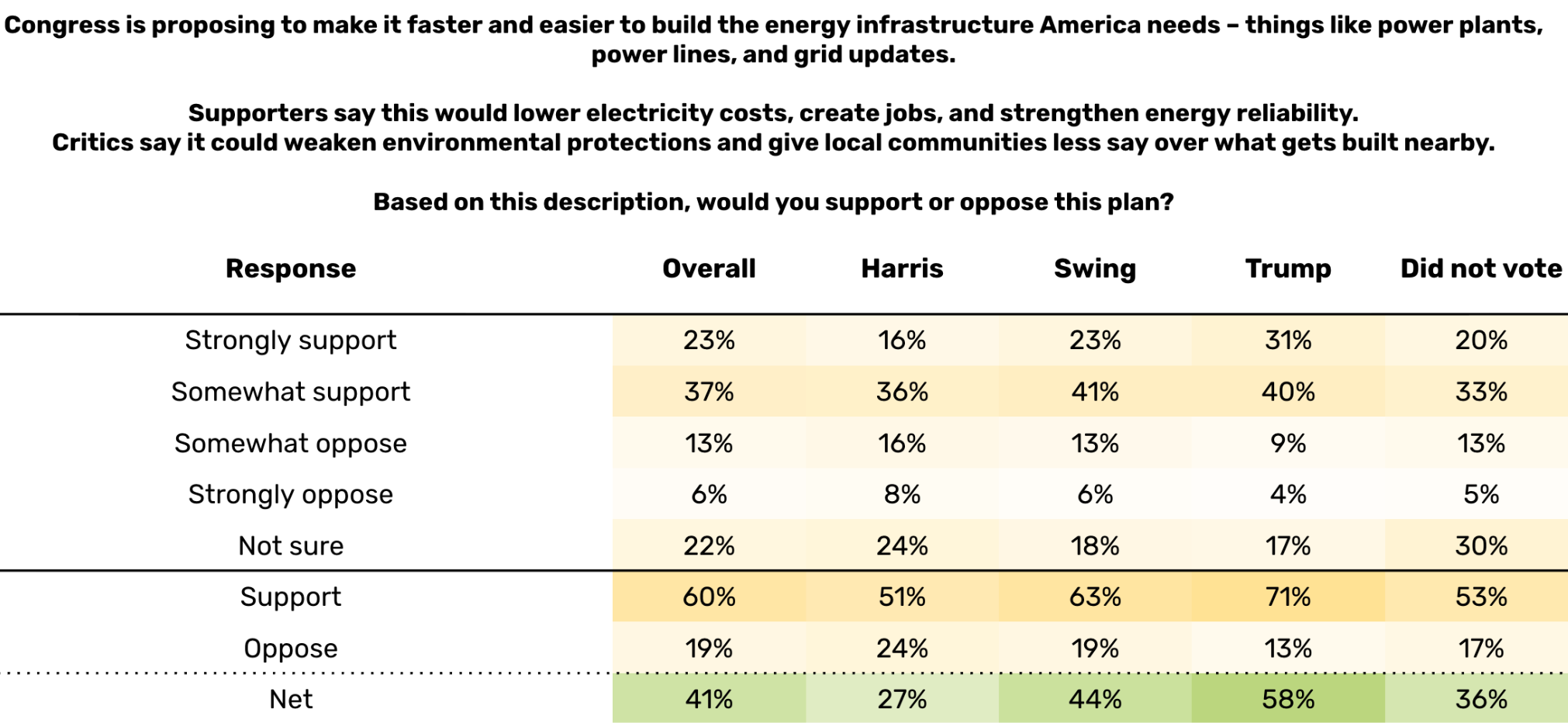
A majority of voters (60%) support a permitting reform plan to make building energy infrastructure faster and easier — even when presented with the arguments detractors are likely to make around environmental protections and local community control. That majority includes 63% of swing voters, 71% of Trump voters, and — perhaps most surprisingly — 51% of Harris voters.
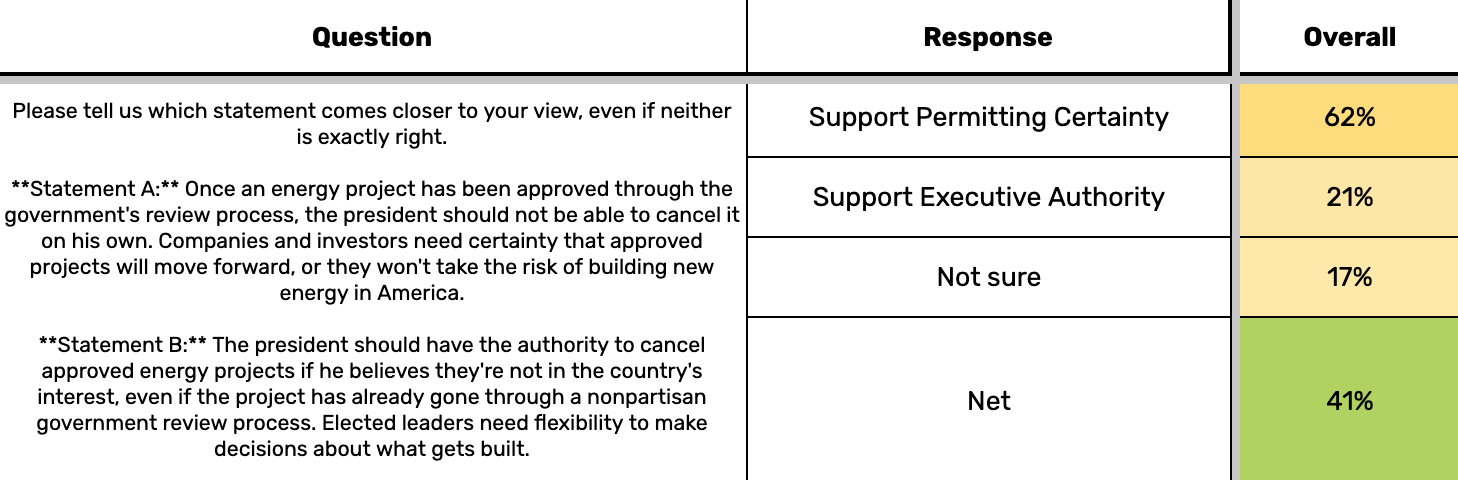
We also tested specific aspects of a potential permitting reform deal, including permitting certainty — the idea that once an energy project has cleared the environmental review process, the president should not have unilateral authority to cancel it. 62% of voters choose certainty over executive authority — including 50% of Trump voters, which is notable given the Trump Administration continues to try to cancel wind projects.
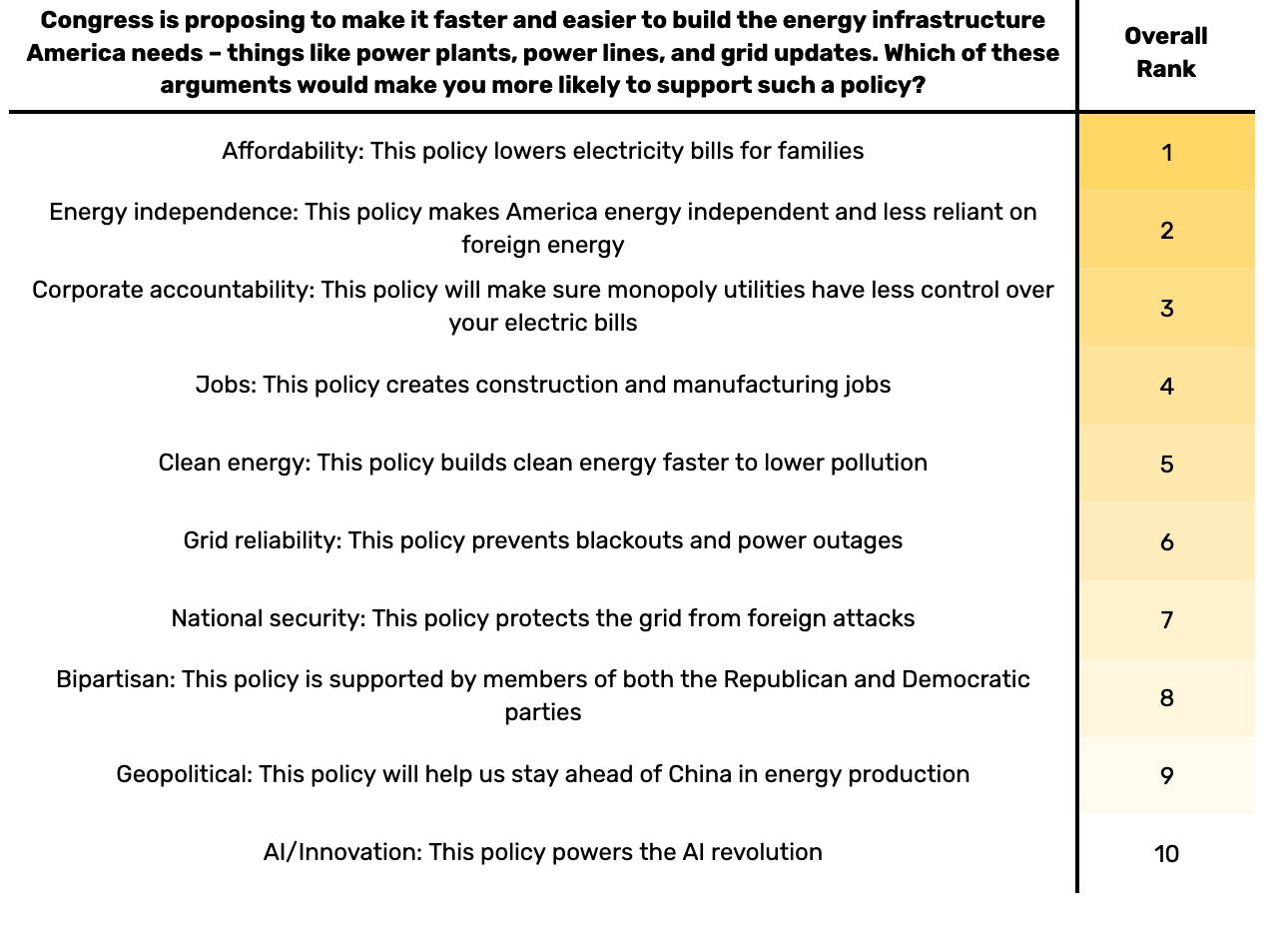
And, even though there is already high support for permitting reform, when voters were asked which arguments would make them more likely to increase their support for a package, voters found an argument grounded in affordability most convincing. American energy independence came next, followed by corporate accountability (ensuring monopoly utilities have less control over electricity bills).
It’s worth noting that, when we tested some of the specific tradeoffs that are inherent to any permitting legislation, we found voters don’t always respond the way abundance advocates might hope. People are protective of local veto power and they prioritize conservation over expanding energy production. (We care about these things, too, but think that too many individual veto points can make it impossible to build anything, and that permitting reform can actually enable more beautiful outdoor spaces.) We specifically designed these questions using the language skeptics would actually use, so we think there’s room to move these numbers with the right framing.
To us, the takeaway is that permitting reform advocates should hammer the costs argument over process. (And when we do talk about process, let’s talk about clarifying and shortening timelines rather than removing vetoes, and about building on already-developed land.)
3. Voters support an “all-of-the-above” energy approach.
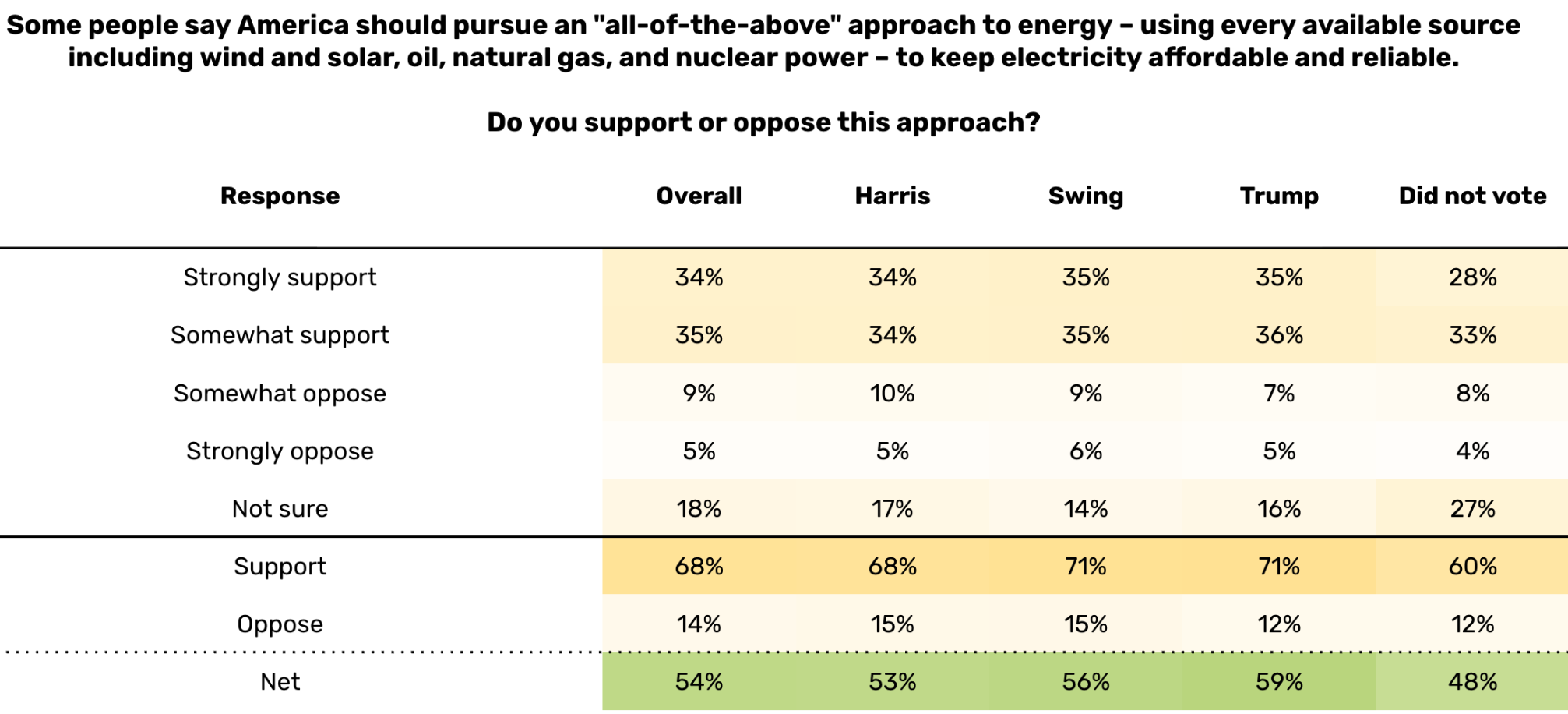
That cost-first instinct also shapes how voters think about energy sources themselves. Over two-thirds of voters (68%) support an all-of-the-above energy approach to keeping electricity affordable and reliable. Support is consistent across party lines: 68% of Harris voters, 71% of swing voters, and 71% of Trump voters are on board.
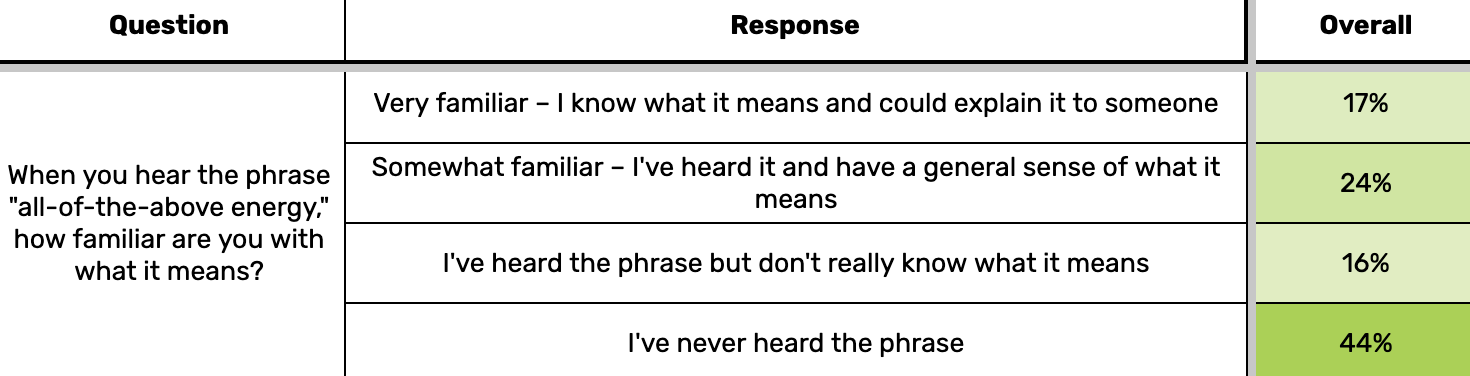
The catch here is that 44% of voters have never heard the phrase before. So while the underlying policy has support, the label won’t do the explaining for you. When they have the time and space, elected officials and other supporters should lay out what it actually means: using every available energy source, including wind and solar, natural gas, and nuclear, to keep costs down and lights on.
4. Data centers face opposition, but companies have a clear path to earning more support.
Nowhere does the affordability lens matter more than on the most contested new source of energy demand: data centers. They’re a hot topic — one that we plan to explore further in future polling. But for now we looked at a few questions as they relate to energy.
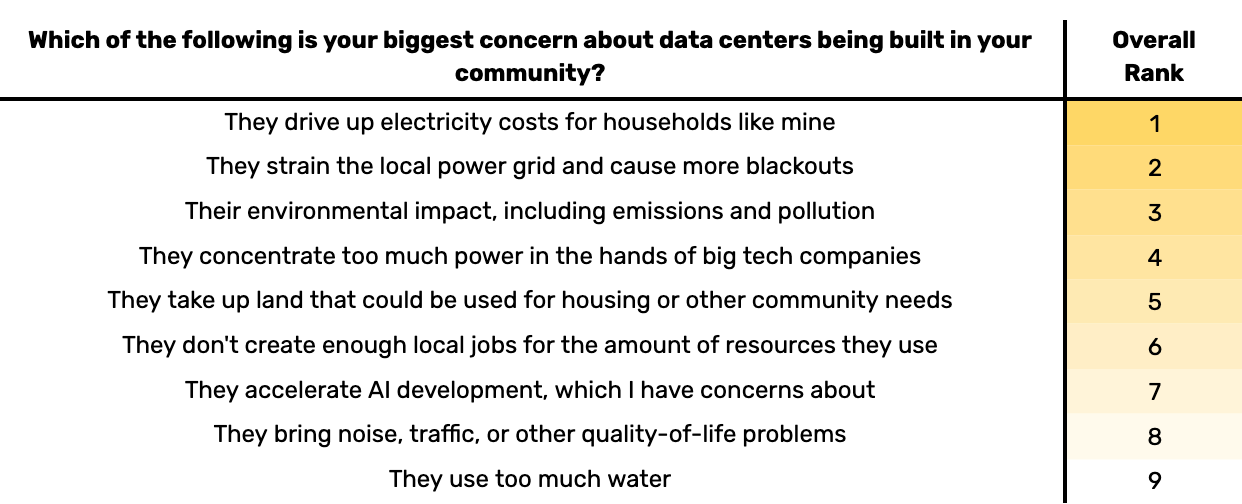
We found a majority of voters (55%) oppose building a data center in their community and less than a quarter (24%) support doing so. Concerns are driven primarily by perceived impacts on energy affordability, with higher household electricity costs ranking as the top concern, followed by strain on local power grids and risk of blackouts, and environmental impacts.
Unsurprisingly, given how much voters care about energy prices, when we asked which commitments tech companies could make so voters are more receptive to data centers in their communities, we found that those speaking directly to costs move voters more. Voters said they would be more open to supporting a data center if the company pays into a fund that lowers electricity bills for all households in the area, guarantees that local residents’ bills won’t go up as a result, and funds grid upgrades that benefit all residents.
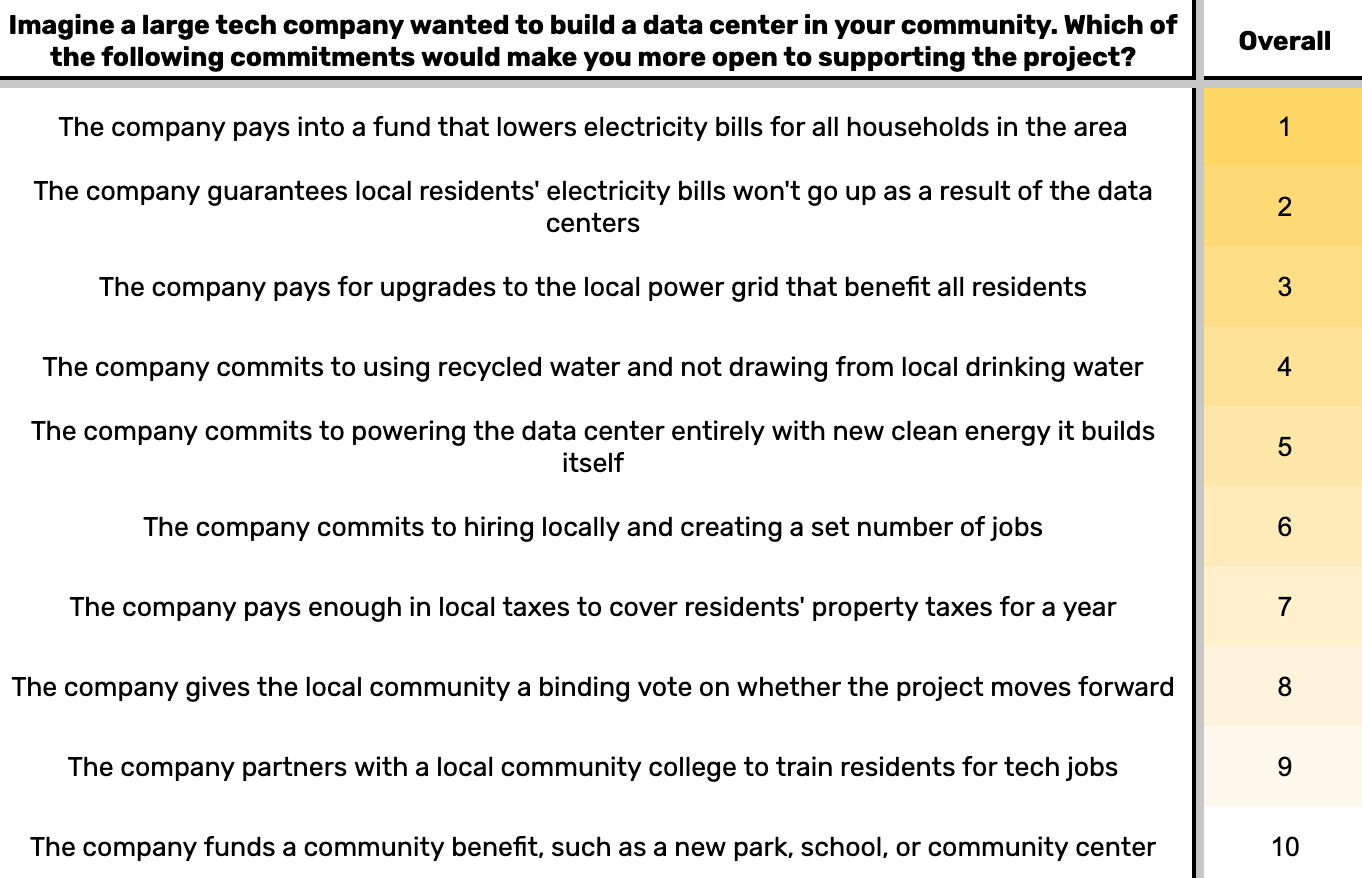
Opposition to data centers is real, but it’s important to recognize what is fueling these concerns. Based on these results, companies that lead with a commitment to bring down costs have a better shot at shifting the political picture. And for politicians, this data provides a way to stand up for constituents’ concerns without calling for a full moratorium on building.
5. The throughline: voters care about costs, and they want politicians to act — even when that means going against their own party.
In our earlier abundance message testing, voters blamed “politicians who’d rather fight than fix problems” most for rising costs. On energy, the fighting is easy to spot: politicians picking favorite technologies for partisan reasons instead of letting the cheapest options win. But voters aren’t with them. Half of Trump voters oppose the president canceling approved projects, even as his administration tries to kill wind. A majority of Harris voters back permitting reform and all-of-the-above energy, oil and gas included. At the end of the day, voters want cheaper energy and politicians who deliver it.
This newsletter is a product of Inclusive Abundance Action, our 501(c)(4).