

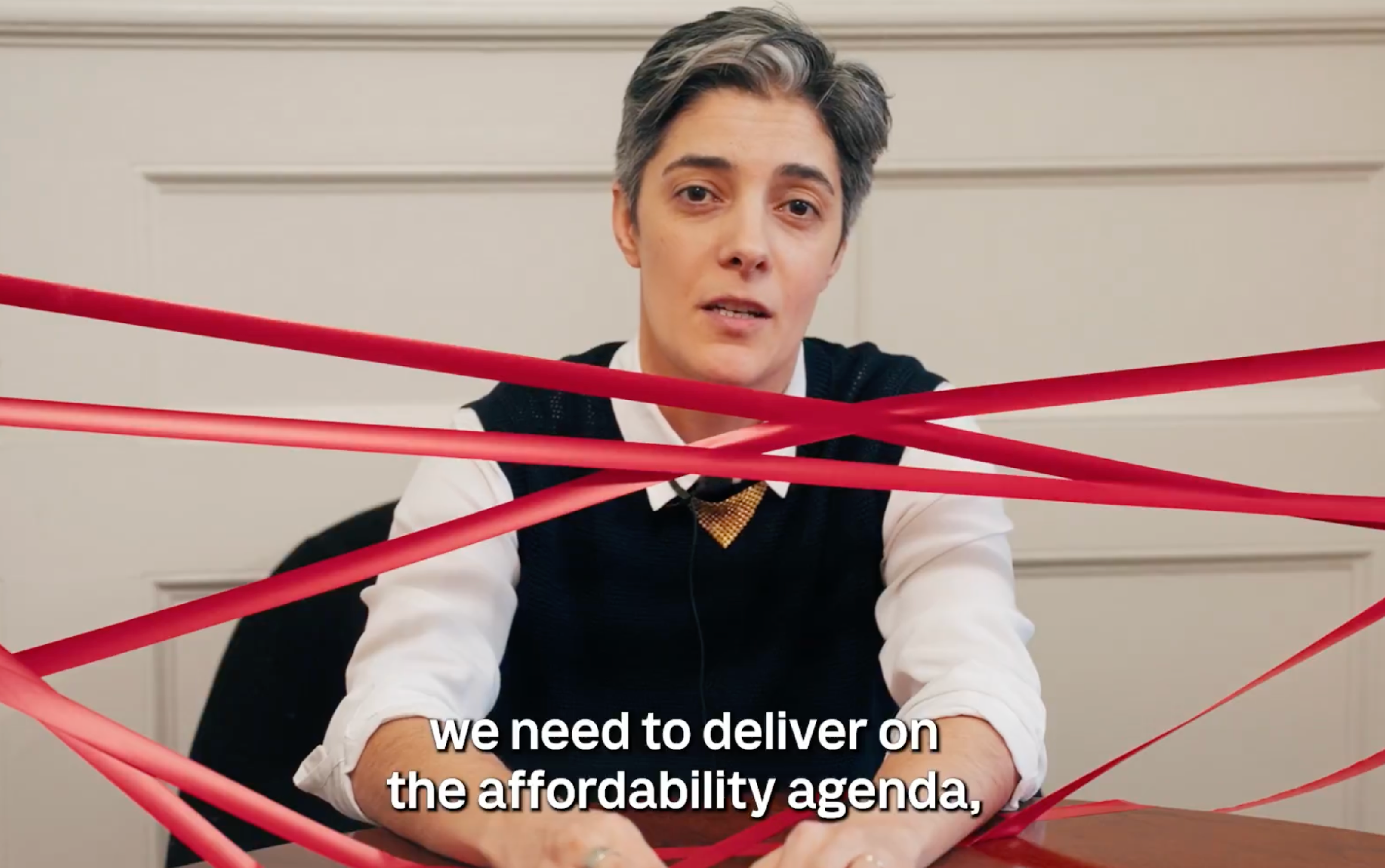
NYC Deputy Mayor Leila Bozorg explains why reforming SEQRA is key to cutting red tape and building more housing
This November, Democrats have an opportunity to win back the House of Representatives, and maybe even the Senate, in part because President Trump has fumbled the bag on voters’ #1 issue, affordability. But there’s a massive debate about how Democrats should take advantage of this political window: Should they lean into abundance – building more, cutting red tape, and lowering costs through supply – or into a more populist message about corporate power and billionaire greed?
We at Inclusive Abundance don’t see this as an either/or choice. We see abundance as an approach to getting things done, something Democrats across the ideological spectrum can use to further their agendas. (And clearly, leaders like Mayor Zohran Mamdani and Governor Mikie Sherrill agree.)
To dive deeper into this question, Blue Rose Research conducted research for us from March 11-17, 2026. 3,007 respondents were interviewed across the 50 of the most competitive congressional districts, and the results were modeled and scored on a representative sample of the national voter file, weighted to likely 2026 voters.
Our goal in pursuing this project was not to poll the Democratic base. Instead, this was a test of what moves voters in the exact districts that will determine the majority in Congress – and is indicative of what will drive victories nationally. We tested a range of abundance messages to develop an evidence-backed menu of messaging options for candidates and elected officials across the left-of-center spectrum.
The abundance messages we developed are in de-jargoned, plain language, mostly avoiding using the word “abundance” itself. There’s been a lot of misunderstanding about what abundance stands for; to us, at the highest level, it’s about fixing and strengthening the government’s ability to do what needs to be done for Americans to experience greater security and freedom. That means abandoning the scarcity mindset that for decades pushed the housing, health care, energy, and innovation Americans need further and further out of reach.
Policy wonks can get into the details of how that would happen, but more important for voters is to understand how that new thinking could improve their lives. And what we found, by and large, is that voters want the results that the abundance movement is laser-focused on delivering.
Below are the key findings from the research. You can view the full results, including crosstabs, HERE, and can download our memo HERE.
1. Affordability continues to be top of mind for voters – and abundance messages that emphasize cost-of-living solutions are very effective at persuading the voters Democrats need to win back.
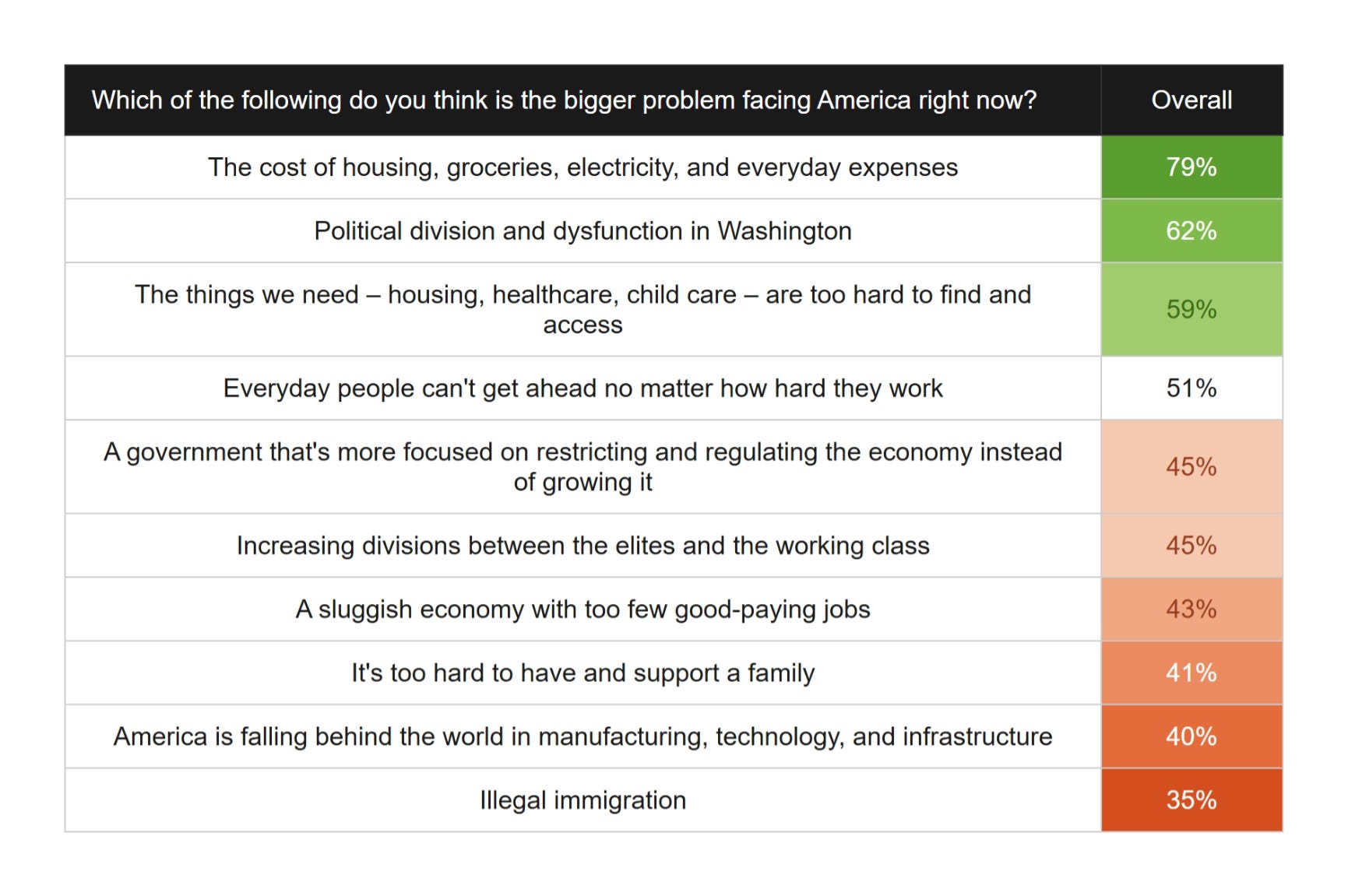
In line with other recent polling, affordability dominates voter concerns heading into the midterms. When given a list of 10 problems facing America today, “the cost of housing, groceries, electricity, and everyday expenses” was selected 79% of the time.
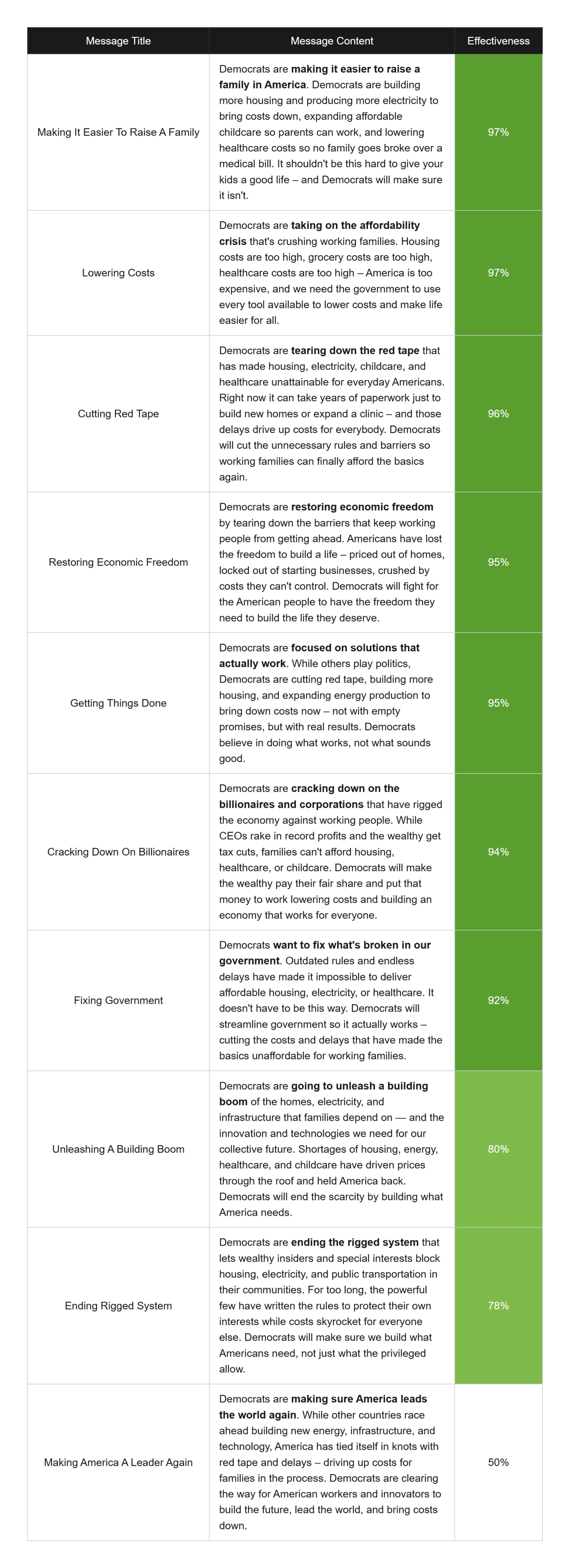
We tested 10 abundance messages that emphasized different solutions to rising costs.1 Seven out of 10 scored in the 90th percentile or higher of all messages Blue Rose has ever tested – showing the underlying framework resonates across multiple framings.
2. The most effective messaging combines aspects of populism and concrete abundance messages.
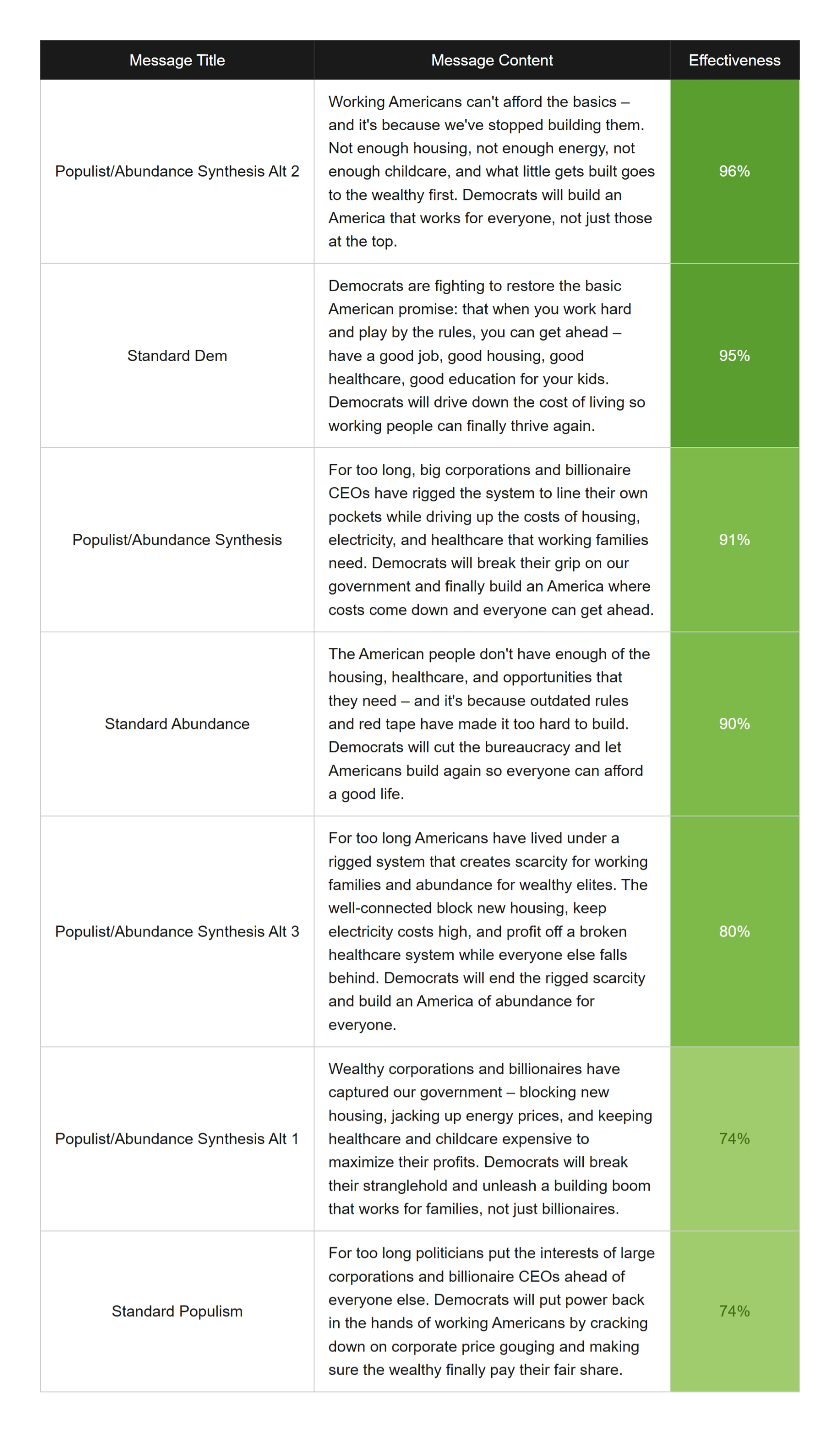
The messages above work at the issue level, giving candidates language for talking about specific affordability solutions in an abundance frame. We also tested the higher-level, vision-setting message a political party or campaign runs on.
The results indicate that abundance-oriented messages can be as successful as populist or standard Democratic messages, and that elements of populism can make abundance messages even more effective.
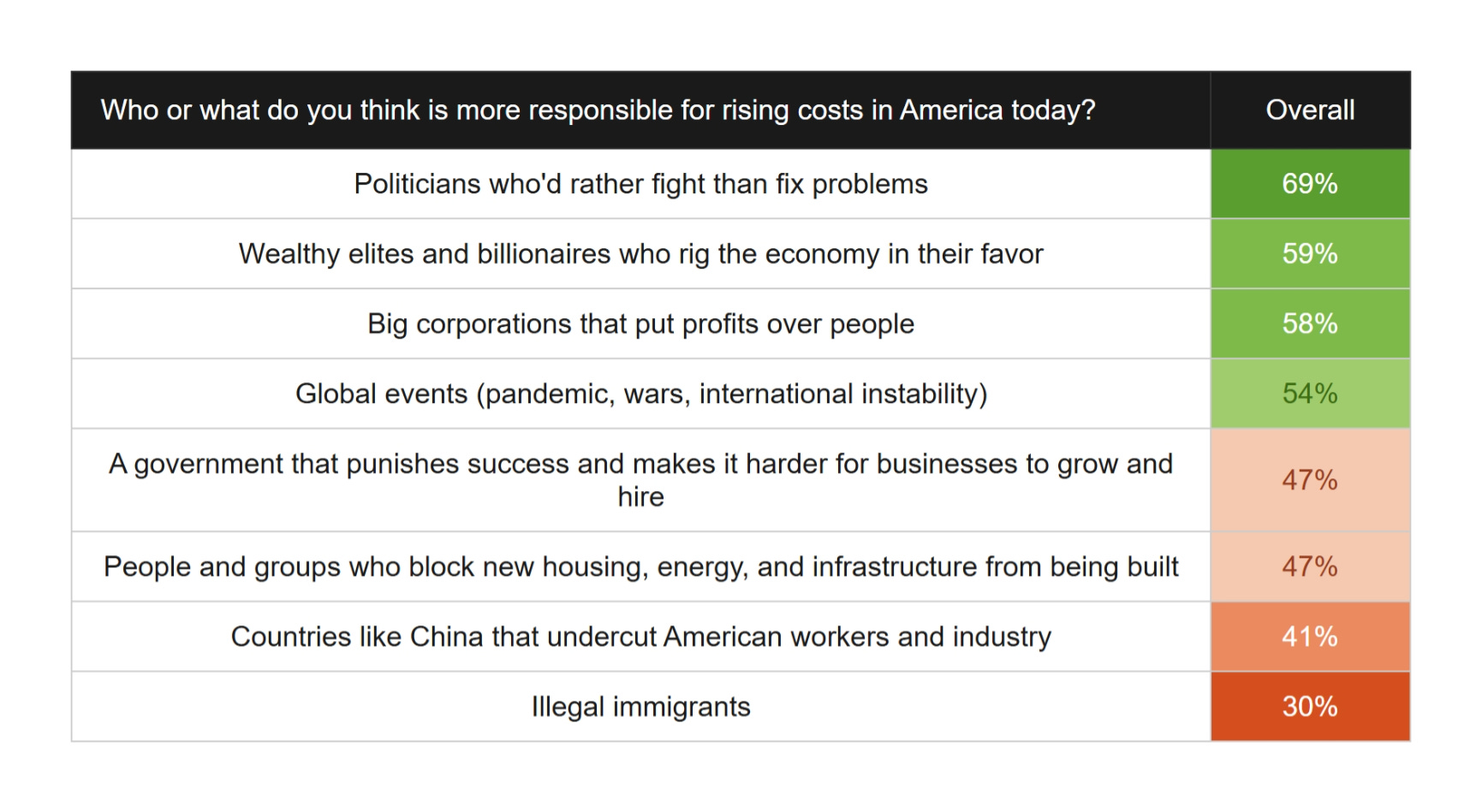
3. Voters blame politicians “who’d rather fight than fix problems” more than corporations and billionaires for rising costs.
Blue Rose has found across its work that the most effective messages name a villain, from corporations, to specific industries, to President Trump and other Republicans. In our testing on potential “villains” for abundance messaging with respect to rising costs, we found that while there are a number of effective options, voters blame “politicians who’d rather fight than fix problems” more than any other villain, by a relatively wide margin – and that grows among the exact swing voters Democrats need to win back. The populist standbys of “wealthy elites and billionaires” (selected 59% of the time) and “big corporations” (selected 58% of the time) do land, but they trail inaction by ten points.
4. Voters still want elected officials to work together, including across party lines, to fix problems. Abundance offers a way to do that.
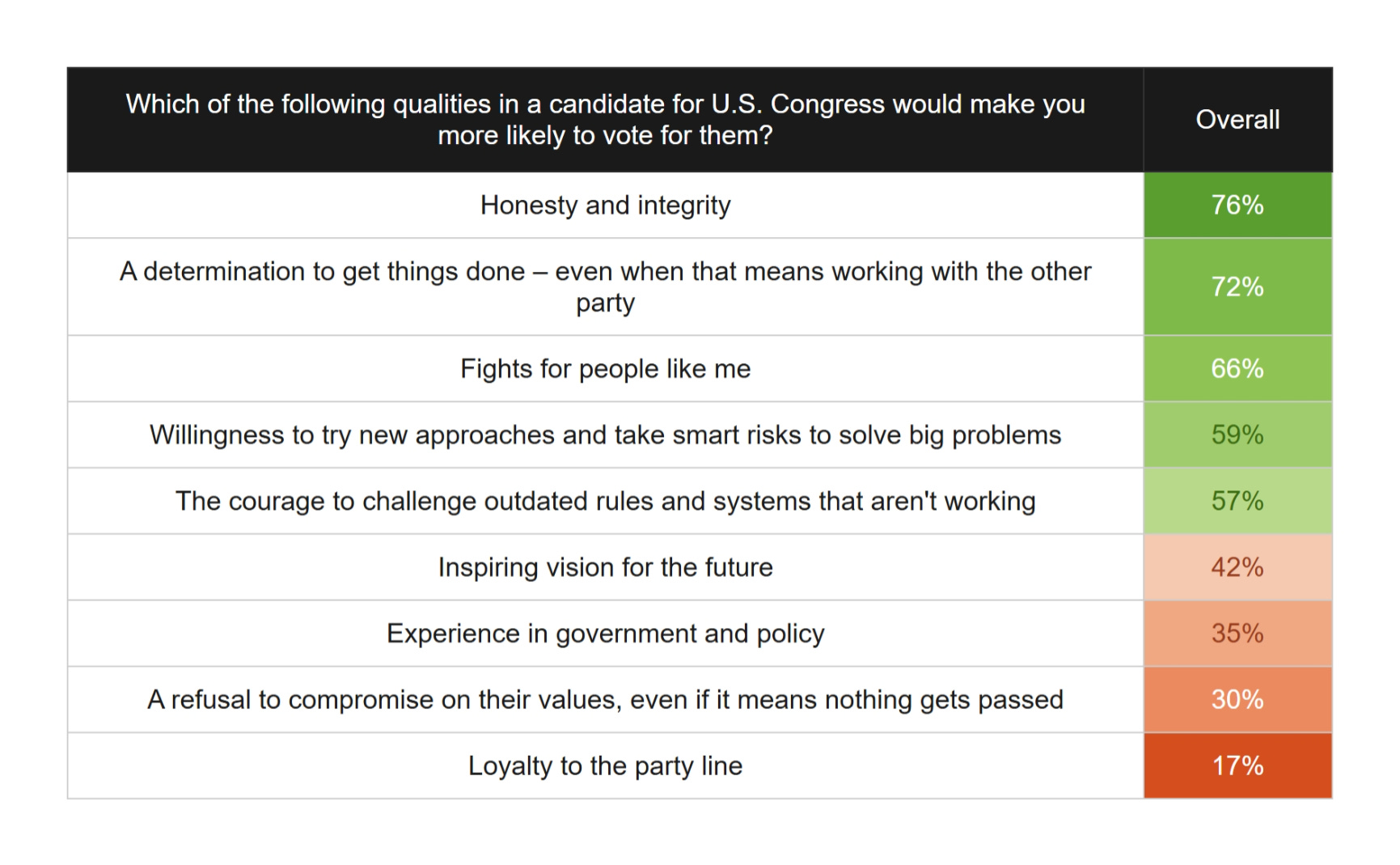
After finding that political division and dysfunction ranks as the #2 problem facing America, and inaction as the #1 villain for rising costs, our research around what voters want in their Congressional candidates reinforces that voters are not looking for ideological warriors – they’re looking for someone who will actually solve problems. Respondents said a congressional candidate having “honesty and integrity” (76%) and “a determination to get things done – even when that means working with the other party (72%) would make them more appealing. Of course, those qualities aren’t in tension – voters want leaders they can trust and who will deliver. “A refusal to compromise on their values, even if it means nothing gets passed” came in at just 30%.
5. Scarcity-related messaging can resonate with voters.
Voters don’t just think essential goods are too expensive – they recognize there aren’t enough of them. “The things we need – housing, health care, child care – are too hard to find and access” ranked as the third biggest problem out of 10 facing the country, behind only affordability and political dysfunction.
This is reflected in the messaging results: The top-performing message (96th percentile) heavily emphasized scarcity – “working Americans can’t afford the basics – and it’s because we’ve stopped building them. Not enough housing, not enough energy, not enough child care, and what little gets built goes to the wealthy first.”
6. Voters care less about America staying competitive with the rest of the world.
Candidates leaning into abundance should avoid framing it as a way for America to keep up with the rest of the world. “America is falling behind in manufacturing, technology, and infrastructure” was near the bottom of voter concerns out of ten items, and the “Making America a Leader Again” message was the lowest-performing of all ten affordability messages (50th percentile).
Bottom Line: Abundance is a winning message in the districts that will decide the House majority. And despite the ongoing debate between populism and abundance, Democrats don’t have to choose. In fact, these results suggest the two frames can powerfully complement each other. There’s a menu of options here for candidates across the left-of-center spectrum – whether they want to go after corporate greed, emphasize bipartisan problem-solving, or focus on cutting red tape – and the data shows abundance-aligned positions and messages are popular and persuasive.
What voters want, above all, are Congressional leaders who will actually deliver on lowering costs. Democrats are increasingly embracing the supply-side reforms that do exactly that, and there’s a way to effectively explain that work to everyday voters.
1 - Measuring against House Vote Choice